srijeda, 6. lipnja 2012.

Rijeka tourist information


Rijeka


Rijeka is the principal seaport in Croatia. It is the third largest city after Zagreb and Spli. There are adjacent towns and municipalities of Lovran, Mošćenićka Draga, Matulji, Kastav, Viškovo, Klana, Kostrena, Čavle, Jelenje, Bakar and Kraljevica.

This city is on very good and attractive strategic position and it has excellent deep-water port. Therefore,the city was a target of constant interests, especially between Italy, Hungary, and Croatia. Rijeka is an administrative centre of Primorje-Gorski kotar County in Croatia. The main base of economy is shipbuilding and maritime transport. There are shipyards „ 3.maj “ and „ Viktor Lenac. Rijeka is very interesting city regarding connection with the rest of the country and wider. There is the Port of Rijeka which is the largest port in Croatia.


The first record of a port in Rijeka date back to 1281. In 1719, the Port of Rijeka was granted a charter as a free port. There are good ferry connections with the surrounding islands. But, there is no direct foreign passenger ship connections. From the other hand, Rijeka has efficient road connections to other parts of Croatia and neighbouring countries. Regarding the connection by air; there is Rijeka Airport, and it belongs to Rijeka but, the airport is on the nearby island of Krk. Train traffic connection is on excellent level and Rijeka is fully integrated into the Croatian railway network and important international rail lines.


Main sights: In spite that Rijeka is not a town completely attached to tourism, there are still few very interesting spots. One of them is Tvornica "Torpedo" (the Torpedo factory). There was produced the first European prototypes of a self-propelled torpedo, created by Giovanni Luppis, a retired naval engineer from Rijeka. It is still possible to visit and to see the remains of this factory, including a well-preserved launch ramp used for testing self-propelled torpedoes. On that launch ramp, in 1866 the first torpedo was tested.

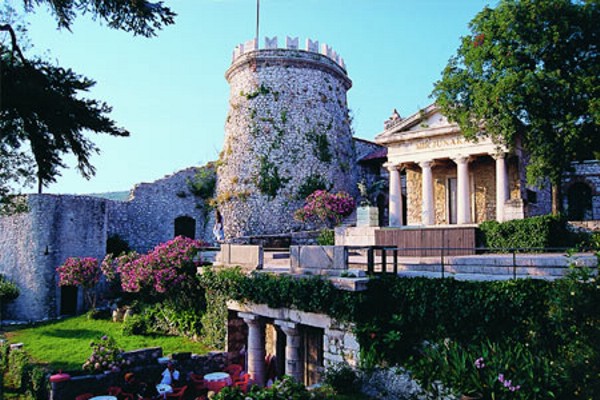
Beside that one, there is one completely different : it is the sanctuary of Our Lady of Trsat. It was built at 135 m above the sea level, on the Trsat hill during the late Middle Ages. This Sanctuary represents the Guardian of Travellers and it is mostly dedicated to seamen. They bring offerings to this place, so she will guard and protect them or help them in time of trouble or sickness. It hosts the Gothic sculpture of the Madonna of Slunj and there you can see art works made by Baroque painter, C. Tasce. There is an interesting and old cathedral, it is The St. Vitus Cathedral.It is a Roman Catholic cathedral, dedicated to the patron saint and protector of Rijeka.


Super-apartments can offer at the centre of Rijeka appropriate accommodation at affordable prices, so you can enjoy your holiday in Rijeka in fully. We can offer apartments, studio-apartments, villas or rooms.

Beaches : Rijeka is one of the most specific town in the Adriatc coastline, regarding its beaches. Most of the beaches that are located nearby centre of the town, are rocky or cove beaches. So, for natural pebble beaches you have to go to Ičići, Medveja or Mošćenička Draga-the furthest away but the nicest.From the other hand, the islands have countless beaches for each kind of needs – from perfect spots for windsurfing on Punat till Rab and its Rajska plaža ( „ Paradise Beach „ ). So, in case you can hire a boat, that's the best possible way to find best beaches of all.


Where to eat in Rijeka? Rijeka is one of the biggest cities of Croatia so there are lots of possibilities to find a proper restaurant or café bar – according to your wishes or needs. There are some: Restaurant „ Mali raj“, Restaurant „ Plavi podrum“, Restaurant „ Le Mandrać “, Tavern „ Nebuloza“, etc.


For more Croatia tourist info and accommodation visit: www.super-apartmani.hr

ponedjeljak, 4. lipnja 2012.

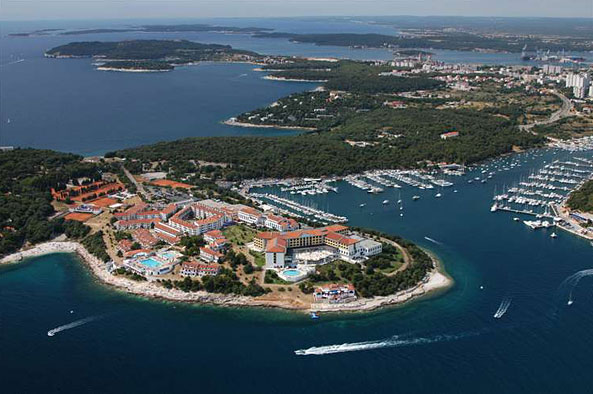
Pula tourist INFO.


Pula


Pula is the largest city in Istria County, at the southern tip of Istria peninsula. Like the rest of the large area, it is known for its mild climate, smooth sea, and unspoiled nature.

The city has a long and well-known tradition of winemaking , fishing, shipbuilding, and tourism. It is interesting fact that Pula has also been Istria's administrative center since ancient Roman times.


Pula Airport is situated north-east of Pula, and serves both domestic and international destinations. It is not a major international destination. However, this is likely to change. There are direct flights into Pula airport from London and Dublin during whole year and several from other large airports in Western Europe during summer. Regarding train traffic, there is a train service operates north from Pula through to Slovenia, but the line remains disconnected from the rest of the Croatian Railways network. There are excellent bus lines with a wide range of local, domestic and international locations and operate from the large bus terminal. There are regular ferry lines to nearby islands and to Venice and Trieste in Italy, from June till September.


Main sights: The city is best known for its many ancient Roman buildings, the most famous of which is its 1st century amphitheatre. It is among the six largest surviving Roman arenas in the world. It is locally known as the Arena. This is one of the best preserved amphitheatres from antiquity. Arena is still in use today during summer film festivals.

There are two other notable and well-preserved ancient Roman structures. It is Triumphal Arch, the Arch of the Sergii, and the co-eval temple of Rome and Augustus, built in the 1 century AD. Other specific and excellent sights are: The Twin Gates (Porta Gemina), The Gate of Hercules, which dates from the 1st century. The Byzantine chapel of St. Mary Formosa was built in the 6th century. The Church of St. Francis dates from the end of the 13th century. It was built in late Romanesque style. There is The Cathedral of the Assumption of the Blessed Virgin Mary. It was built in the 6th century, in time when Pula became the seat of bishop. There is another exquisite sight, it is The Orthodox Church of St. Nicholas with its Ravenna-style polygonal apse. It was built in 6th century and rebuilt partially in the 10 century.


So, it is easy to conclude that Pula has many sights worth seeing. Super-apartments would like to offer in the centre of Pula different kind of apartments, studio-apartments, villas and rooms –all related to your needs. The beauty of nature in Pula's surrounding countryside and crystal blue water of the Adriatic sea, have made the city an internationally popular summer vacation destination.

Brijuni National Park is nearby and this destination is visited by numerous world leaders since it was the summer residence of Josip Broz Tito. Pula is a unique place for your holiday also thanks to its beautiful and well-equipped beaches.So, there are Beach Valkana is in a bay and offers an excellent choice of beaches which are awarded with a Blue Flag. Another beach awarded with the Blue Flag is Histria. There are more beaches: beach Havajsko, beach Ambrela, beach Stoja.


Restaurants with its Istrian unique dishes are well-know in gastronomic world and there are some of them: Restaurant „Biska“, Restaurant „Scaletta“, Restaurant „Vallsabion“, Restaurant „ Vela Nera „ Restaurant „, Villa Vulin“, Tavern „Marino“, Tavern „Taj“.

nedjelja, 3. lipnja 2012.

Poreč - Croatia


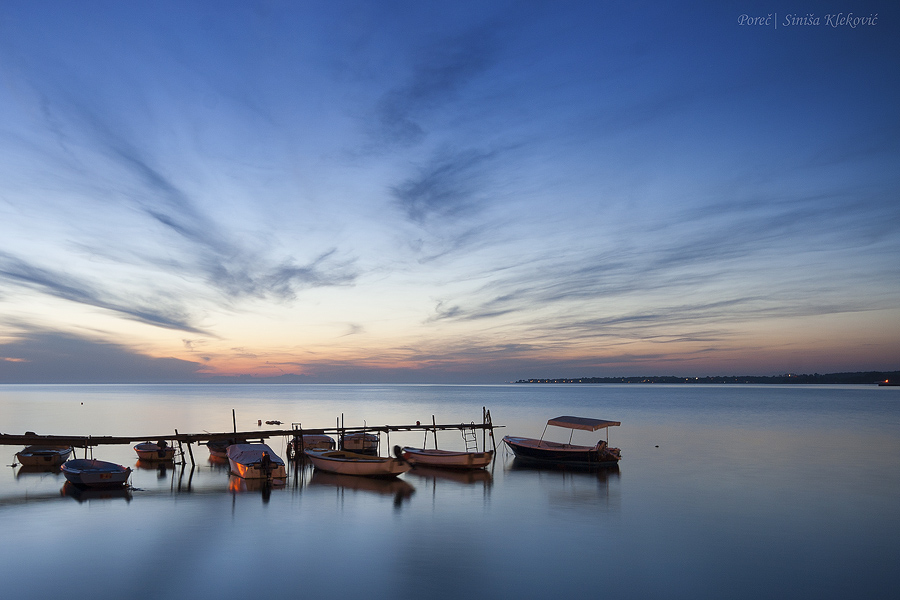
Poreč


Poreč is a town and municipality on the western coast of the Istrian peninsula in Istria County, Croatia. Poreč is almost 2000 years old town and is located around a harbor protected from the sea by the Island of St. Nicholas. This town has 37 km long coastline, stretching from the Mirna River near Novigrad to Funtana and Vrsar in the south. Its most important landmark is the 6 century Euphrasian Basilica. It is a UNESCO World Heritage List since 1997.


Super-apartments recommend road traffic as way to access this town. Poreč is very well connected with the rest of Istria and many other larger cities such as: Zagreb, Rijeka, Ljubljana / Slovenia /. The nearest airport is in Pula and the closest railway station is in Pazin. Regarding the sea traffic, these days it is primary used for tourist excursions.

Main sights: it is interesting that the town plans still shows the ancient Roman castrum structure. Two main streets - Decumanus and Cardo Maximus, still preserved in their original forms. There is a Marafor – a Roman square with two temples attached. One is dedicated to the Roman God Neptune. It is erected in the first century AD.There are a few houses from the Romanesque period and they are preserved and beautiful.


Francisian church „ Dieta Istriana“ , built originally in Gothic style, it was remodeled in the Baroque style during the 18th century. Regarding the beaches it is important to tell that tourist infrastructure is intentionally dispersed along the 37 km long coastline. The south hosts self-contained centres like Plava Laguna ( Blue Lagoon), Zelena Laguna ( Green Lagoon ), Bijela Uvala ( White Cove ) and Brulo. To the north, there are Materada, Červar Porat, Ulika and Lanterna.

In the peak of the season, the area's temporary population can exceed 120,000. Super-apartments offer plenty of accommodation facilities, in the centre of Poreč, at affordable prices. There are possibilities to offer villas, studio-apartments and room – all upon your request. Regarding the possibilities for sport activities, there are many of it. Sports complexes are well-developed and open year-round.


Poreč is not a town for only summer time vacations. It is well-known in the off season and many of visitors from all Croatia, Slovenia, Austria and Italy visit the area. Poreč is well-know by its events during the summer. Vinistra is one of the most important wine events. Not only for this area but wider. There is Dance Star, the final show during the May. Already traditional, it will gather more than 3.000 dancers from all over the world, including the main event – the Great Finals. The host for it is Intersport centre, Zelena Laguna ( Green Lagoon ).

In Poreč you can enjoy in excellent dishes with asparagus and very rare and high-rated truffles. Some of them are Restaurant „Dvi Murve“, Reastaurant „Filipini“, Restaurant „Zlatna ribica“, Restaurant “ Istra“, Restaurant „ Sv. Nikola. You can enjoy in the authentic ambience of the Istrian taverns, such are: Tavern „Istarska Konoba“, Tavern „ Kaštel“, Tavern „Kažeta“, Tavern „ Kompa“. There are many of wine shops where you can taste amazing and indigenous Istrian products. In this wine shops you can find extra virgin oil, made from Poreč's olives, special kinds of honey and excellent and sharp rakija ( brandy ). You can purchase them as souvenirs because they are a unique reminders for this beautiful part of Croatia.Those wine shops are: Wine shop „ Arman“, Wine shop „ Epulon“ and Wine shop „ Pinot“.


petak, 1. lipnja 2012.

Pelješac - Croatia


Pelješac


Pelješac is a Croatian peninsula on Adriatcic coast side. Position of  Pelješac is on southern part of Croatia and in an immediate vicinity of Dubrovnik. There are many of benefits for Pelješac in touristic manner – it is very good connected with rest of the country by good roads and in the same time, there are regular ferry lines with islands Korčula and Hvar.

Pelješac is part of the Dubrovnik-Neretva County and it is a second largest peninsula in Croatia. It begins with an isthmus nearby city of Ston till the top of peninsula – a cape Lovišta. The length of the peninsula is 65 km. Some of its larger towns are : Orebić in the western part,Trpanj in the northwest part, Janjina in the central part and Ston, in the eastern part of peninsula.


From tourist point of view, there are some interesting sights : mountain region of peninsula Pelješac is known as hunting grounds for mouflon. This peninsula is known as well by some excellent wines, e.g Dingač, Postup and you will be very welcome because tourism and all activities related to tourism are main occupation of its inhabitants. There are many location for salt pans, one of the oldest in Europe. Ston is known by his oyster cultivation activity. Long maritime tradition on this peninsula is reason that you can see and enjoy in a charming beauty of numerous villas which are surrounded by amazing and well-designed gardens.

Orebić is small and well-known town on the southern side of the peninsula, vis-à-vis Korčula island. Sourrounding of Orebić is composed by pine forests, plantations of almonds and plantations of citrus fruits. This town has been important maritime center and his name comes from the 16th century, after sailor's family Orebić.


Super-apartments would like to recommend beautiful beaches of Orebić and Trsenica beach is one of the best. Beside the apartments which are in our tourist offer, in Orebić are possible to find many camp-sites. Some of very charming villas are available for your accommodation.

Trpanj is small town and port on the northern coast line of Pelješac. Trpanj is well-known by its sunny beaches and this is a perfect place for the family vacation and holiday. Ston is well-known for its salt pans and oyster cultivation. All coastline nearby Ston, along the ship canal and the embankment of Papratna is convenient and excellent for swimming, fishing and underwater fishing. Specificity of Ston is wall with fortification all around the city. Length of the wall is 980 m and it is composed by classic forms of wall with fortification elements. Regarding accommodation, Super-apartments offer many apartments in each town of Pelješac so in Ston. Good food and good wines you can find in many of restaurants: „ Bella vista, „ Bianco“. Taverns: „ Bakus“, Lukas tavern“.


Location of Mali Ston / Little Ston / is in an inlet and this small town is known for its cultivation of seashells in the canal of Mali Ston. Mali Ston is surrounded by old walls in a shape of square. It is a perfect place for a calm family holiday thanks to beautiful beaches, pine forests around it and wonderful small town atmosphere. There you can find restaurants: „Kapetanova kuća“, „ Mlinica „, „ Villa Koruna „. and there you can enjoy in a specific and excellent wines and dishes.

All other small and picturesque towns at Pelješac : Trpanj, Viganj, Žuljana, Postup. They are known for its calm beauty and they are from the side of Super-apartments strongly recommended for family holiday.


četvrtak, 31. svibnja 2012.

Opatija - Croatia


Opatija


Opatija is in western part of Croatia, southwest of Rijeka, on the Adriatic coastline. Opatija is in the Gulf of Kvarner and, geographically is on Istrian peninsula but this city is not a part of Istria County.

Opatija is a part of Primorje-Gorski Kotar County. Comparing with many other cities on the Adriatic coastline, Opatija is very specific, thanks to its Austro-Hungarian flair that marks this town like some magical and magnetic beauty, even more than 120 years. This town is actually, an ideal choice for people who seek and looking for splendor and luxury.
Thus, Super-apartments are at your service to offer different kind of accommodations, apartments, studio-apartments and rooms at affordable prices. 


There is an interesting nick name for Opatija – „ Croatian Monte-Carlo“, and it is a synonym for splendor and luxury, so it is appropriate choice for all who wish to have a good time or just relax on their vacation time.

Opatija is well-known by its villas. Theye were built in the 19th century by Austro-Hungarian noblemen. Most of them are located next to famous walking path „ lungo mare“. This walking path is 11 km long and it winds along the sea.
Beside its beautiful villas, Opatija has some extraordinary and well-groomed gardens and parks. There you can enjoy in splendid scent of indigenous plants.

How to get there: by car using the highway or regional road, by plane using the airport in Pula ( 82 km away ), by bus lines, by train and by local and international ferry lines.


Sightseeing in Opatija, which are particularly interesting: St. Jakob Park is one of the places you will meet frequently on your walk through Opatija. This park is also known as horticultural specificity that covers more than 3,64 hectares with more than 160 different plants. Girl with seagull, this statue became one of the symbols of Opatija. It was erected in 1956 and sculptor Zvonko Car made this work of art. Lungomare walking path – This is one of the most beautiful walking paths on the Adriatic. You can enjoy a 11 km long path that is unique by its beauty. Church of Mary denunciation - This Neoromantic building is one of the favorite religious gatherings of Opatija's inhabitants. Its characteristic detail is the green dome.


Beaches : Opatija has many beaches, due to its good position on the coastline. Many of them have appropriate facilities and they are marked by a Blue flag. There are many concrete terraces for your complete comfort. For those who look for nature, there are many hidden bays. For a family holiday there is Mošćenićka Draga. Opatija is a favorite place for those who do not search for fun in noisy discotheques but rather wish to spend time in some of the lounge bars. Anyway, you will be able to dance in one of the beach bars.There are plenty of summer events in Opatija.


Opatija is famous for its marinas and nautical tourism. ACI Marina Opatija lies between Opatija and Ičići. From the year of 1999, this marina is carrier of the Blue Flag. Bike fans have several cycling paths at their disposal in the vicinity. For adventure lovers, there is possibility for climbing in in area of Učka mountain. Islands Cres and Lošinj are excellent localities for diving.

There are many range of restaurants and some of them are: Commodore ACI Marina, Bevanda, Evergreen, Tavern Istranka, Camelia, Laurus etc. Some of excellent café bars are Cafe bar Tennis, Cafe Wagner, Caffe bar Beto, Caffe bar Bellvue, Caffe bar Galija, Lounge bar Monokini etc.


srijeda, 30. svibnja 2012.

National Park Krka - Croatia


National Park Krka


Are you willing to see and to feel a unique beauty of the nature and, in the same time, to enjoy the benefits of an amazingly beautiful vacation, we truly recommend the visit to the National Park Krka.

The access to the National park Krka is very easy.You can reach it over the A1 motorway or across the Adriatic Highway. It is open for visitors year round, and this breathtaking National Park can be toured by water, by road or by foot on many hiking trails. There are three entrances to the National Park Krka: Roški Slap, Skradin, Lozovac.


 Roški slap can be reached by road from Drniš, Knin and Skradin, or by the excursion boats of the National Park Krka. There are organized boat excursions from Roški Slap to the Krka Monastery. You can visit as well, the Early Croatian Fortress of Trošenj and Nečven. Skradin Entrance is starting point for the visitors that are willing to gor through the river Krka. This is an excellent opportunity to enjoy in an extraordinary beauty of the river Krka canyon.

There is bicycle trails, about 3 km in length, leading from the Skradin Bridge to Skradinski buk (Krka Falls). For any further information, you can contact the branch office of the National Park Krka in Skradin, where you can also find a souvenir shop and multimedia gallery. Entrance Lozovac is the main entrance for visitors that come by road.


If you prefer to take a walk, there is great opportunity to reach Skradinski Buk from this entrance. It will take about 10 minutes and hiking trail is about 800 m long. When it comes to the reason why so many visitors come over here through the whole year, Super-apartments will give you an insight to some facts about the National Park Krka.

This area was declared as a National Park in 1985 and this area is along the course of the Krka River, which flows through a deep and picturesque canyon for over 75 km and creates beautiful and unique waterfalls– Bilušić buk, Miljacka, Brljan, Rošnjak, Manojlovački slap, Roški slap and the fantastic Skradinski buk (Krka Falls 46 m), Europe's largest barrier of the travertine.

There are two cultural monuments: the Franciscan monastery on the island of Visovac and the Krka monastery. Visovac Island is in the middle of Visovac Lake. The Franciscan Monastery of Our Lady of Mercy, and the Church of Our Lady of Visovac, have stood here since 1445. They form a unique entity with their extraordinary and magnificent grounds.The monastery possesses a significant archaeological collection, a collection of historical church linens and dishes, and a rich library with many valuable books.


Due to the centuries of worship of Our Lady, the island of Visovac is also called Our Lady’s Island. There is another interesting spot - Jaruga Hydroelectric Power Plant. This is a hydroelectric power plant on river Krka and it is one of the oldest power plants in the world. Its present location dates back to 1903.

Regarding the accommodation, Super-apartments can offer plenty of apartments at affordable prices in nearby cities Skradin, Vodice, Šibenik.

Restaurants that we can recommend are: Stari mlin, Kalikuša, Bak, Panorama. There is interesting beach in Skradin city, where you can feel a mixture of the river and the sea. It is because of the proximity of the river estuary to the sea. There are many beautiful places, in Skradin or in area of National Park, where you can eat and enjoy in a perfect synergy of the beautiful nature around you and excellent meals. 

For more tourist INFO and accommodation visit Super-Apartments

Croatia Beaches - Super Apartments